One of life’s greatest culinary treats is the taste of a fresh, juicy tomato ripe off the vine from your bountiful home garden.
When you add the fresh green peas, zucchini, green beans and summer squash, you have a real summer smorgasbord of both great taste and nutrition.
Fresh-from-the-garden products provide an extra nutrition bonus that is not available from “market-fresh” produce. Since some nutrients, such as Vitamin C, are sensitive to oxygen, foods begin to lose some of their nutrient content as soon as they are picked.
Some foods, such as broccoli, are such Vitamin C powerhouses that the amount lost during marketing and storage doesn’t detract from the final content. Still, if you can eat produce right after it’s been picked, you have captured it at both its flavor and nutritional peaks.
Vegetables provide vitamins, minerals, and fiber – important for regularity and associated with reduced risk of heart disease and cancer. According to the American Institute for Cancer Research, eating at least five servings of vegetables and fruit each day could alone reduce risk of cancer by 20 percent.
In addition to the vital nutrients that vegetables provide, recent attention has focused on their newly identified phytochemical content. Researchers are finding that phytochemicals, such as flavonoids, lycopene, and indoles, have significant potential for preventing diseases. Hundreds of phytochemicals still await further research.
Here’s a quick look at a the nutritional offerings of some of the vegetables you might find in your summer harvest:
Tomatoes:
Definitely a gem of the garden for both its taste and nutritional value, the tomato is truly a culinary wonder…in salads, salsas, and sandwiches. The tomato’s nutritional profile deserves top billing for its rich Vitamin A & C content as well as for antioxidants such as lycopene, which is thought to protect against prostate cancer.
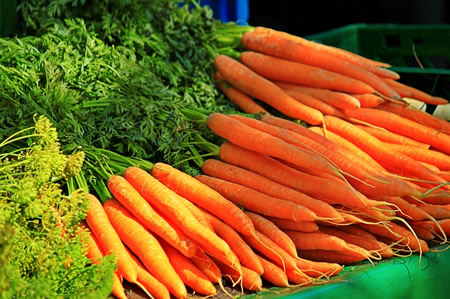
Carrots:
Carrots are one of the richest food sources of beta-carotene. Beta-carotene is a precursor for Vitamin A and a powerful antioxidant. Carrots also contain high amounts of soluble fiber, associated with reduced heart disease and stroke.
Peas:
While not noted for a single specific vitamin or mineral, a 2/3-cup serving of peas does contain fair amounts of folacin, thiamin, potassium, and Vitamin C. The nutritional strength of peas is their protein content compared to other vegetables (the only group that contains more protein per ounce is the bean family) and their fiber content. A 2/3-cup serving provides as much fiber as 1 tablespoon of wheat bran or 1/2-cup of oatmeal.
Kale and Broccoli:
These two cruciferous vegetables contain high amounts of Vitamins A and C, more calcium than most vegetables, and are filled with cancer-fighting compounds such as flavonoids and indoles. Add a healthy dose of fiber in that same serving and you know why nutritionists everywhere sing the praises of broccoli and kale.
These aren’t the only “good-for-you” vegetables. Cucumbers, green beans, corn, squash, peppers, (the list goes on and on) – all contain vitamins, minerals, fiber and phytochemicals which may contribute to your well-being.
Most are also low in calories and do not contain cholesterol. There are substantial differences between the nutritional contributions of individual vegetables, so eating a variety of them is especially important to be sure you are getting all the benefits they have to offer.
Keep in mind that vegetables don’t have to be fresh to contribute significantly to your diet. Canning, freezing, and drying are all processes that are designed to preserve food and its nutrients for use when it isn’t convenient to pick it fresh.
But there is no question that the taste of fresh vegetables makes it easy to get the recommended daily servings. Eat all you can from your own garden, your neighbor’s garden, and the farm stand down the road in order to take full advantage of this summer’s produce. This is Mother Nature at her best.
Source: JoAnn Prophet, MS, RD, AICR