If you’re looking for a powerful way to improve blood sugar control, support gut health, and feel fuller longer, increasing your daily fiber intake is one of the most effective (and easiest) strategies.
This guide explains why fiber matters for diabetes and highlights the best high-fiber foods to add to your meals, plus simple recipe ideas to help you get started.
Why Fiber Is Essential for Diabetes
1. Fiber slows down glucose absorption
Soluble fiber forms a gel-like texture in the digestive tract. This slows digestion and causes glucose to enter the bloodstream more gradually, reducing blood sugar spikes.
2. Fiber supports satiety and weight management
High-fiber meals keep you full for longer, which can support healthy weight maintenance — an important factor in insulin sensitivity.
3. Fiber fuels a healthier gut
The beneficial bacteria in your gut thrive on fiber. A healthy microbiome is linked to improved blood sugar stability and lower inflammation.
4. Fiber helps reduce cholesterol
Soluble fiber binds to cholesterol particles and helps remove them from the body, which is especially important for people with diabetes who face increased cardiovascular risk.
Recommended Fiber Intake
Most adults need about 25–30 grams of fiber per day, but many get far less. Adding high-fiber foods to meals throughout the day can make a significant impact with minimal effort.
The Best High-Fiber Foods for Diabetes
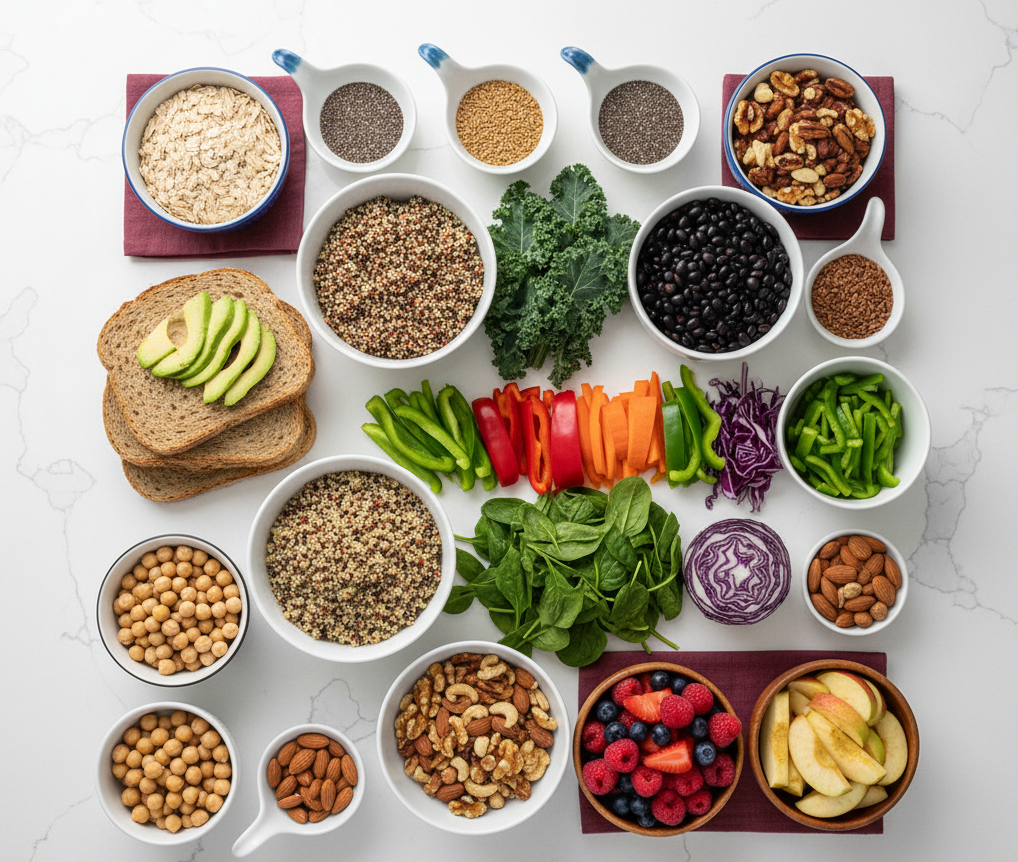
1. Legumes
- Lentils
- Chickpeas
- Black beans
- Kidney beans
Why they help: Legumes provide a powerful mix of soluble fiber, plant-based protein, and steady digesting carbohydrates.
2. Whole Grains
- Rolled oats
- Steel-cut oats
- Quinoa
- Barley
- Whole-grain bread and wraps
Why they help: Slow digestion and stable energy make whole grains ideal for blood sugar control.
3. Vegetables
- Leafy greens
- Broccoli
- Carrots
- Brussels sprouts
- Cauliflower
Why they help: Low in carbs and high in fiber, non-starchy veggies offer maximum nutritional impact.
4. Fruits (especially with edible skin)
- Berries
- Apples
- Pears
- Oranges
- Kiwi
Why they help: Fiber-rich fruits satisfy sweet cravings while providing vitamins and antioxidants.
5. Seeds and Nuts
- Chia seeds
- Flaxseed
- Walnuts
- Almonds
- Pistachios
Why they help: Fiber plus healthy fats support stable glucose levels and longer-lasting fullness.
Simple High-Fiber Recipes to Try
1. Overnight Oats with Chia
Combine rolled oats, chia seeds, unsweetened almond milk, cinnamon, and fresh berries. Chill overnight for a balanced, fiber-packed breakfast.
Estimated Nutrition (per 1 cup serving): 320 calories; 10g protein; 9g fat; 48g carbs; 11g fiber; 6–8g sugars; 1g saturated fat; 80mg sodium
2. Veggie-Loaded Lentil Soup
Simmer cooked lentils with tomatoes, carrots, celery, leafy greens, garlic, and herbs. Finish with a squeeze of lemon.
Estimated Nutrition (per 1.5 cup serving): 260 calories; 18g protein; 4g fat; 38g carbs; 14g fiber; 6g sugars; <1g saturated fat; 350mg sodium
3. Roasted Chickpeas
Season chickpeas with olive oil, garlic powder, and paprika. Roast until crispy for a high-fiber snack or salad topping.
Estimated Nutrition (per ½ cup serving): 190 calories; 8g protein; 5g fat; 30g carbs; 8g fiber; 2g sugars; <1g saturated fat; 200mg sodium
4. Whole-Grain Avocado Toast
Spread mashed avocado over whole-grain toast and top with sliced radishes and chia seeds.
Estimated Nutrition (per 1 slice): 250 calories; 6g protein; 14g fat; 27g carbs; 9g fiber; 2g sugars; 2g saturated fat; 210mg sodium
5. Black Bean and Veggie Taco Bowl
Layer black beans, quinoa, greens, salsa, and roasted vegetables for a satisfying high-fiber meal.
Estimated Nutrition (per 1 bowl): 420 calories; 17g protein; 12g fat; 55g carbs; 16g fiber; 7g sugars; 2g saturated fat; 480mg sodium
Tips for Increasing Fiber Safely
Boosting fiber is extremely beneficial, but it’s important to increase intake gradually.
- Add about 5 grams per day until your body adjusts.
- Spread fiber-rich foods between meals.
- Drink plenty of water to help the digestive system process additional fiber.
How Many Grams of Carbs per Meal for People with Diabetes?
Carbohydrate needs can vary depending on factors such as age, activity level, medications, and individual blood sugar goals. However, general guidelines suggest that most adults with diabetes aim for:
- Meals: 30–60 grams of carbohydrate per meal
- Snacks: 15–30 grams of carbohydrate per snack
It’s important to pair carbs with protein, fiber, and healthy fats to slow digestion and minimize blood sugar spikes. For example, a balanced plate might include:
- 1/2 cup of cooked oats (about 27g carbs) topped with chia seeds and berries
- 1 slice of whole-grain bread (about 15g carbs) with avocado and a boiled egg
- 1/2 cup cooked lentils (about 20g carbs) with roasted vegetables and a small serving of olive oil
Remember, individual needs can vary, so it’s best to monitor your blood sugar and work with a registered dietitian or healthcare provider to determine the ideal carbohydrate target for each meal.
Final Thoughts
Fiber is one of the most effective and natural tools for improving blood sugar control. By choosing smart high-fiber foods and adding them consistently to your meals, you’ll support better energy, digestion, and overall health. Start with small additions and build from there — your body and blood sugar will thank you.
Related Keywords
high fiber foods for diabetes, what to eat for better blood sugar, diabetic high fiber recipes, diabetes nutrition, soluble fiber foods, best fiber sources, blood sugar control tips, fiber and gut health, low glycemic meal ideas, diabetic cooking tips, whole grains for diabetes, legumes and diabetes