Sugar-free Valentine’s Day candy is often marketed as a safer option for people with diabetes, but not all sugar-free treats are created equal. While these candies may not contain traditional sugar, they often include sugar alcohols and other sweeteners that can still affect blood sugar levels.
This time of year, caregivers, partners, and family members frequently search for diabetes-friendly Valentine’s Day gifts.
Understanding how sugar-free candy works can help you choose treats that feel special without causing unexpected blood sugar spikes or digestive discomfort.
What Does “Sugar-Free” Really Mean?
When a candy is labeled “sugar-free,” it typically means it contains less than 0.5 grams of sugar per serving. However, that sugar is often replaced with sugar alcohols or alternative sweeteners.
Common sugar alcohols used in Valentine’s Day candy include:
- Maltitol
- Sorbitol
- Xylitol
- Erythritol
While these ingredients usually raise blood sugar less than regular sugar, they are not completely carb-free and can still impact glucose levels.
Sugar Alcohols and Blood Sugar: What to Know
Sugar alcohols are partially absorbed by the body, meaning they typically cause a slower and smaller rise in blood sugar compared to sugar. However, some sugar alcohols — especially maltitol — can raise blood sugar more than people expect.
Additionally, consuming large amounts of sugar alcohols may cause digestive side effects, including:
- Bloating
- Gas
- Stomach cramps
- Diarrhea
This is why portion size matters just as much as ingredient choice.
How Much Sugar-Free Candy Is Safe?
Even with sugar-free candy, moderation is key. A few pieces are usually manageable for most people with diabetes, especially when eaten alongside a meal or protein-containing snack.
Helpful portion tips include:
- Stick to the serving size listed on the label
- Avoid eating sugar-free candy on an empty stomach
- Monitor blood sugar to see how your body responds
- Choose smaller, individually wrapped portions
How to Read Candy Labels With Diabetes
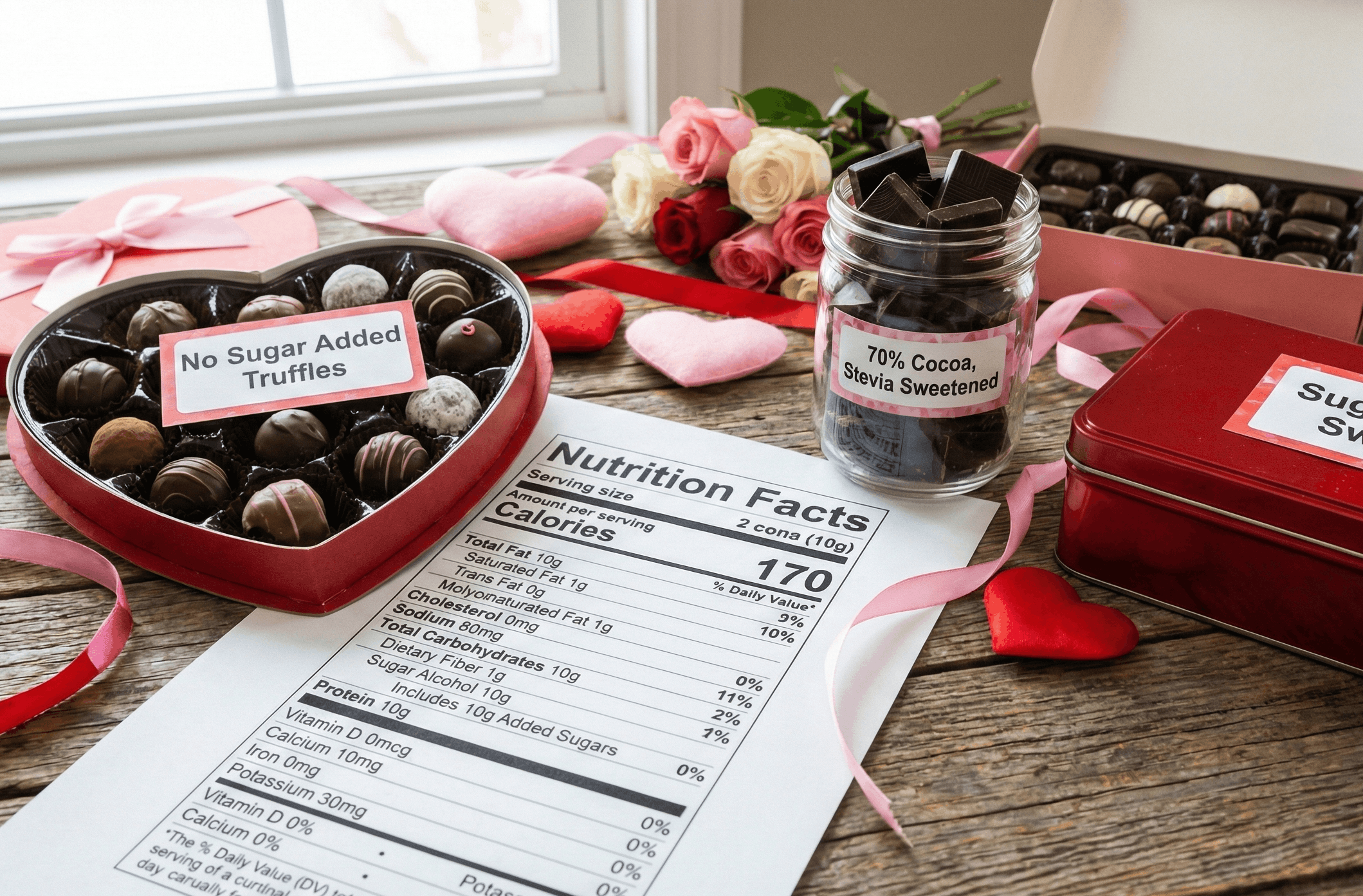
Label reading is essential when choosing Valentine’s Day candy. Don’t rely on the front of the package alone.
When checking the Nutrition Facts label, pay attention to:
- Total carbohydrates: Sugar-free does not mean carb-free
- Sugar alcohols: Some people subtract half the grams from total carbs
- Serving size: Packages often contain multiple servings
- Calories: Sugar-free candy can still be calorie-dense
If you’re unsure how sugar alcohols affect your blood sugar, testing after eating a small portion can help guide future choices.
Better Valentine’s Day Treat Alternatives
If sugar-free candy doesn’t sit well with you, there are other diabetes-friendly Valentine’s Day options:
- Dark chocolate (70% cacao or higher)
- Fresh berries with whipped topping
- Homemade low-carb desserts
- Non-food gifts paired with a small treat
Sugar Alcohols in Valentine’s Day Candy: Quick Comparison
| Sugar Alcohol | Impact on Blood Sugar | Digestive Side Effects | Commonly Found In |
|---|---|---|---|
| Erythritol | Very low impact | Minimal | Chocolate bars, hard candies |
| Xylitol | Low to moderate | Mild at higher amounts | Gummies, mints |
| Sorbitol | Moderate | Gas, bloating | Chewy candies |
| Maltitol | High (similar to sugar) | Common digestive issues | Chocolate-covered candies |
You can also browse our collection of Diabetic Dessert Recipes for Valentine’s Day treats made with blood sugar management in mind.
Enjoy Valentine’s Day Without the Stress
Valentine’s Day should be about enjoyment, not anxiety. Sugar-free candy can fit into a diabetes-friendly lifestyle when chosen carefully and enjoyed in moderation.
Frequently Asked Questions About Sugar-Free Valentine’s Day Candy
Is sugar-free candy safe for people with diabetes?
Sugar-free candy can be enjoyed occasionally by people with diabetes, but it still contains carbohydrates and sugar alcohols that may affect blood sugar. Portion size and ingredient choice are key.
Which sugar alcohols raise blood sugar the most?
Maltitol tends to raise blood sugar the most and can cause digestive discomfort. Erythritol generally has the least impact on blood glucose.
How much sugar-free candy can a person with diabetes eat?
Most people can tolerate a small serving, such as one or two pieces, especially when eaten with a meal. Blood sugar responses vary, so monitoring is recommended.
Can sugar-free candy cause stomach issues?
Yes. Eating large amounts of sugar alcohols may cause bloating, gas, or diarrhea, particularly in sensitive individuals.