

Author: Diabetic Gourmet


Diabetes and Pregnancy

Women with diabetes can have healthy babies, but it takes planning ahead and effort. Pregnancy can make both high and low blood glucose levels happen more often. It can make diabetic eye disease and diabetic kidney disease worse. High glucose levels during pregnancy are dangerous for the baby, too.
Food Exchange Information For Diabetics

The diabetic patient’s meal plan should specify that he or she can have specific numbers of exchanges; for example, a typical lunch may allow two bread, two meat, one fat, two vegetable, and one fruit portion. By referring to a list of exchanges, the person can develop his or her own menu. The idea is that by following the exchange system, the person will automatically pirate distribution of carbohydrates, protein, and fats.

Diabetes and Periodontal Disease

If you have diabetes, you know the disease can harm your eyes, nerves, kidneys, heart and other important systems in the body. Did you know it can also cause problems in your mouth? People with diabetes have a higher than normal risk of periodontal diseases.

The Gallbladder: An Organ You Can Live Without

The gallbladder is a small, muscular, pear-shaped sac nestled in a depression on the right underside of the liver. It holds about a quarter of a cup of a yellowish-green, pasty material called bile. Bile contains water, bile salts and acids, pigments, cholesterol, phospholipids (a type of fat molecule), and electrolytes (electrically charged fluids). Bile tastes bitter, and this is why the word bilehas come to denote bitterness. Bile breaks up, or emulsifies, large globs of fat into smaller globs in the small intestine, a first step in fat digestion.

Medication and Older Adults

Of all the problems older adults face in taking medication, drug interactions are probably the most dangerous. When two or more drugs are mixed in the body, they may interact with each other and produce uncomfortable or even dangerous side effects.

The Truth About Choosing Medical Treatments

When you’re sick it isn’t always easy to get well again. There are lots of medicines and other ways to treat health problems. You may hear about some from a friend. Or you may see an ad on TV or in the paper. Or your doctor may recommend a treatment.

Diabetes Mellitus: A Major Risk Factor for Cardiovascular Disease

The National Heart, Lung, and Blood Institute (NHLBI) and National Institute of Diabetes and Digestive and Kidney Diseases (NIDDK) of the National Institutes of Health (NIH) have collaborated with three leading private health organizations on a major public health statement to alert physicians, patients, and the general public to the increasing significance of diabetes mellitus as a major risk factor for cardiovascular disease.

The Ins and Outs of Insulin Resistance

Although scientists have intensely studied insulin resistance for four decades, its link to conditions such as obesity, cardiovascular disease, hypertension, and diabetes has recently landed it squarely in the media spotlight.

Gastroparesis and Diabetes

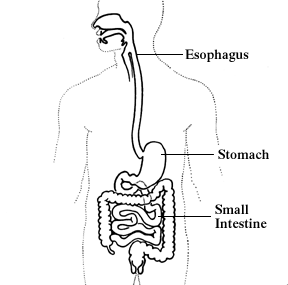
Gastroparesis is a disorder in which the stomach takes too long to empty its contents. Gastroparesis is most often a complication of type 1 diabetes. At least 20 percent of people with type 1 diabetes develop gastroparesis. It also occurs in people with type 2 diabetes, although less often.

Preventing Diabetic Kidney Disease

Preventing kidney and urinary tract diseases, improving the health and well-being of individuals and families affected by these diseases and increasing the availability of organs for transplantation.

Tips for Talking to Your Doctor

Today, patients take an active role in their health care. You and your doctor will work in partnership to achieve your best possible level of health. An important part of this relationship is good communication. Here are some questions you can ask your doctor to get your discussion started.

Reasons for Brain Tumor Increase Not Black and White

It was a routine annual physical, and everything checked out fine. Blood pressure normal, electrocardiogram normal, weight good, no particular complaints–except one. The patient, 65-year-old Sylvia Zeidner of Potomac, Md., had been having some peculiar dizzy spells, and she laughingly told the doctor, I must have a brain tumor.

View / Load More from:


Copyright © CAPCO Marketing, LLC. All Rights Reserved. Privacy Policy | Disclaimer / Terms of Use / DMCA