Browsing the next page of Healthy Living.


Gastroparesis and Diabetes

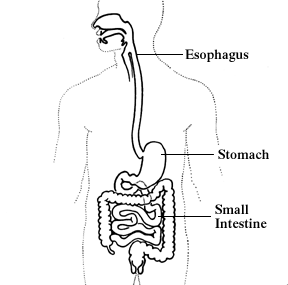
Gastroparesis is a disorder in which the stomach takes too long to empty its contents. Gastroparesis is most often a complication of type 1 diabetes. At least 20 percent of people with type 1 diabetes develop gastroparesis. It also occurs in people with type 2 diabetes, although less often.

The Ins and Outs of Insulin Resistance

Although scientists have intensely studied insulin resistance for four decades, its link to conditions such as obesity, cardiovascular disease, hypertension, and diabetes has recently landed it squarely in the media spotlight.

Diabetes Mellitus: A Major Risk Factor for Cardiovascular Disease

The National Heart, Lung, and Blood Institute (NHLBI) and National Institute of Diabetes and Digestive and Kidney Diseases (NIDDK) of the National Institutes of Health (NIH) have collaborated with three leading private health organizations on a major public health statement to alert physicians, patients, and the general public to the increasing significance of diabetes mellitus as a major risk factor for cardiovascular disease.

The Truth About Choosing Medical Treatments

When you’re sick it isn’t always easy to get well again. There are lots of medicines and other ways to treat health problems. You may hear about some from a friend. Or you may see an ad on TV or in the paper. Or your doctor may recommend a treatment.

Medication and Older Adults

Of all the problems older adults face in taking medication, drug interactions are probably the most dangerous. When two or more drugs are mixed in the body, they may interact with each other and produce uncomfortable or even dangerous side effects.

Exercise Makes Instant Difference in Reducing Blood Pressure

The long-term benefits of exercise in reducing high blood pressure are well known, but a recent study by the University of Maryland published in the January issue of the American Journal of Hypertension shows that they can be immediate as well.

Water: Ten Reasons To Drink Up

Experts have recommended 6-8 cups per day for years, but recent studies have raised this amount even further to 10 cups for women and 12 cups for men. All liquids count toward the 10 to 12 cup goal, but bear in mind that both caffeine and alcohol act as diuretics and may actually increase normal fluid losses. Ten good reasons to increase your fluid intake…

Diabetes in African Americans

About 730,000 African Americans have diabetes but do not know they have the disease. Identifying these undiagnosed cases and providing clinical care for their diabetes is a major challenge for the health care community.

Alcohol and Diabetes

Most people with diabetes can drink alcohol safely if they drink in moderation (one or two drinks occasionally), because in higher quantities alcohol can cause health problems.

5 Tips for Parents with Overweight Children

People may find it hard to believe that children need a diet and fitness plan. It’s a common misconception that growing kids can eat anything and will stay healthy because they naturally enjoy running around and being active.

View / Load More from: Healthy Living


Copyright © CAPCO Marketing, LLC. All Rights Reserved. Privacy Policy | Disclaimer / Terms of Use / DMCA